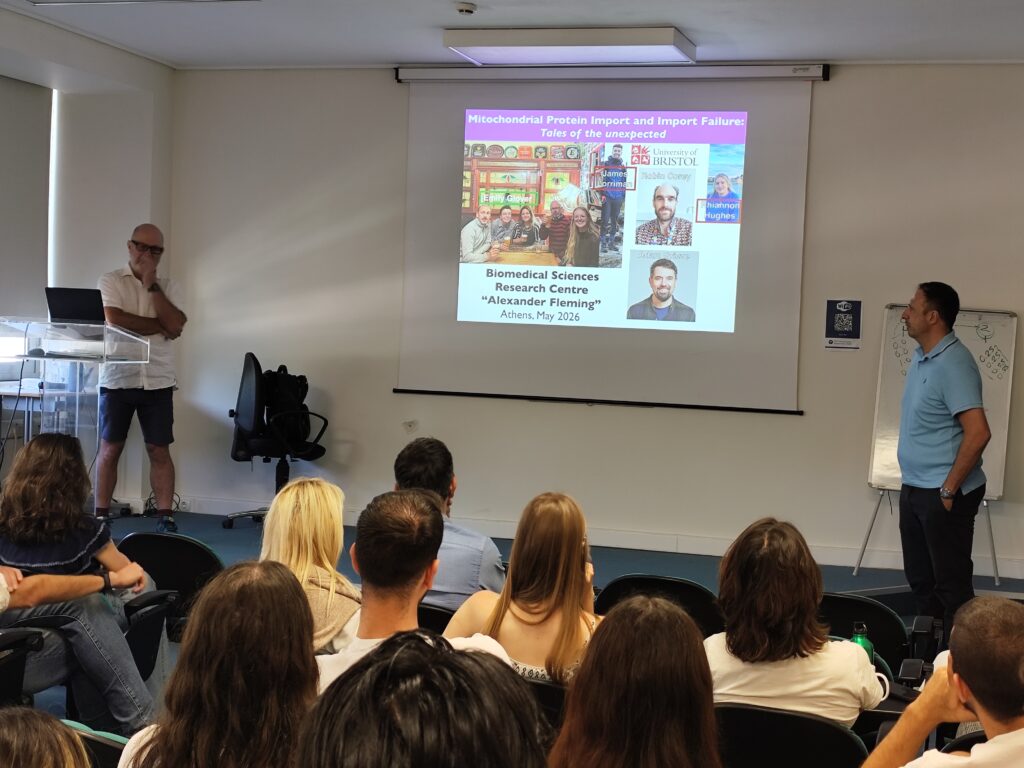
The 4th Leader Seminar Series at BSRC Alexander Fleming, entitled “Mitochondrial Protein Import and Import Failure: tales of the unexpected”, was delivered by Ian Collinson from the School of Biochemistry, University of Bristol, UK.
In this seminar, Professor Collinson discussed the critical role of mitochondrial protein import in maintaining cellular homeostasis and energy production. He highlighted how failures in mitochondrial import can severely affect cell and tissue function, particularly in energy-demanding tissues such as muscles and the nervous system.
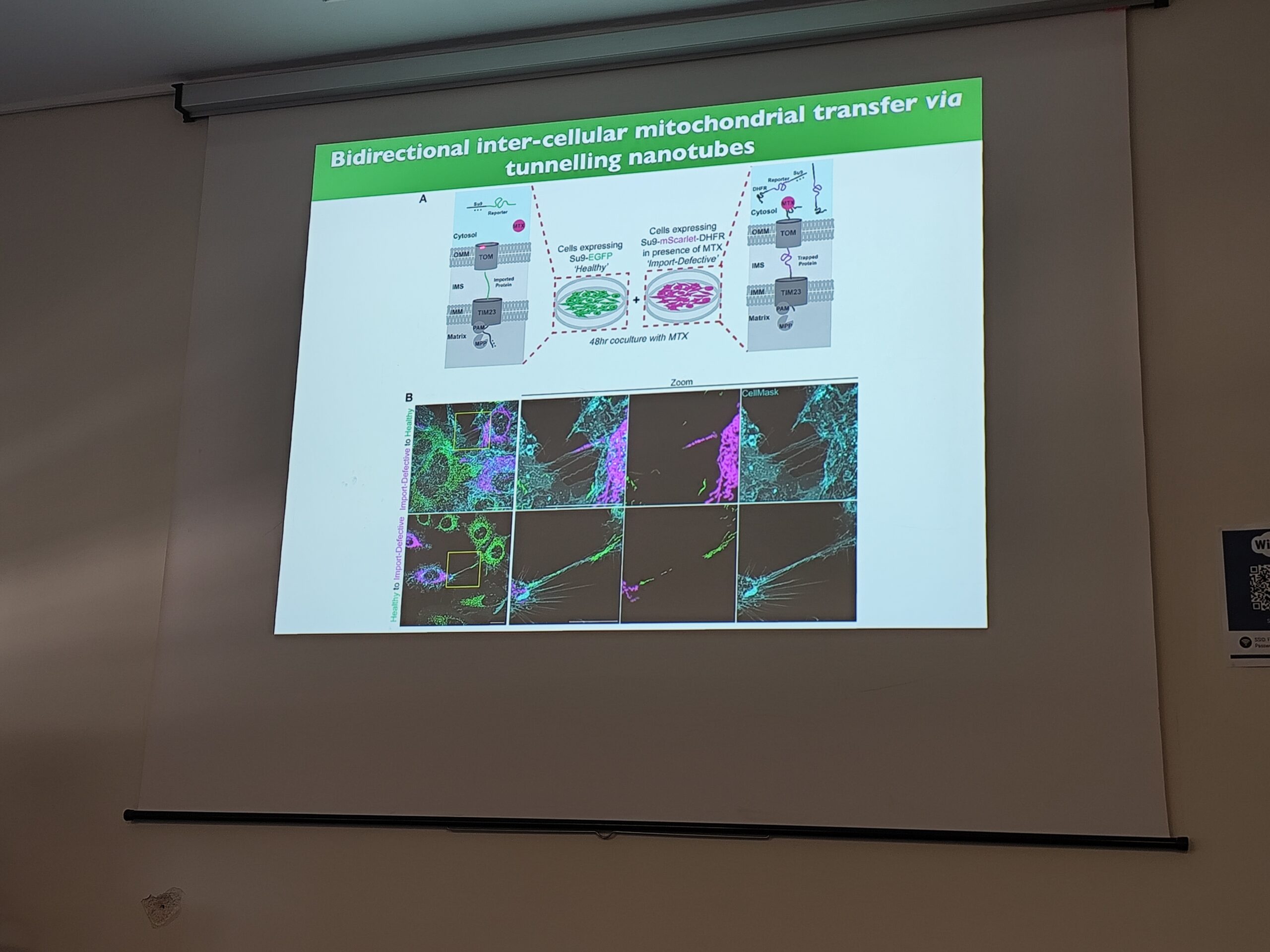
The first part of the talk focused on the PINK1 kinase and its role in sensing mitochondrial import dysfunction and initiating mitophagy. Professor Collinson presented findings suggesting that PINK1 also undertakes an additional, unexpected cellular role beyond mitochondrial quality control. The second part explored inter-cellular mitochondrial transfer through tunnelling nanotubes (TNTs), describing how cells may discard defective mitochondria while acquiring functional ones to restore mitochondrial activity. The seminar concluded with perspectives on how mitophagy and mitochondrial transfer may represent interconnected cellular responses to mitochondrial dysfunction.